What Is a HEPA Filter? Why Your Facility Needs One
If your facility is dealing with dust, odors, mold, or airborne contaminants, the issue usually isn’t whether you need better air filtration—it’s how fast you can fix it.
That’s where HEPA filtration comes in.
At Climate Control Solutions, we help businesses, contractors, and facility managers quickly deploy portable HEPA air scrubbers and filtration systems—so you can protect your team, meet compliance standards, and keep projects moving.
What Is a HEPA Filter?
HEPA stands for High-Efficiency Particulate Air. To meet HEPA standards, a filter must remove 99.97% of airborne particles at 0.3 microns, one of the most difficult particle sizes to capture.
This level of filtration doesn’t just improve air quality—it solves real operational problems, including:
- Dust during construction
- Mold spores during remediation
- Airborne bacteria and viruses
- Smoke and fine particles from wildfires
Why Businesses Actually Call Us
Most customers don’t reach out asking for a “HEPA filter.”
They call because something isn’t working:
- “Our job site is full of dust—we need containment.”
- “We found mold and need to pass inspection.”
- “Employees are getting sick—something’s wrong with the air.”
- “We need negative air for a controlled environment.”
HEPA filtration is the solution behind all of these issues.
How HEPA Filters Work
HEPA filters are tested at 0.3 microns, the most penetrating particle size. If they perform at that level, they perform even better across other particle sizes.
They capture contaminants through three main methods:
- Interception – particles stick to filter fibers
- Impaction – larger particles collide and get trapped
- Diffusion – smaller particles move randomly and are captured
This is why HEPA filtration is widely used in medical, industrial, and hazardous environments.
Where HEPA Filtration Is Critical
In many environments, HEPA filtration isn’t optional—it’s required.
Construction & Job Sites
- Control drywall dust, silica, and debris
- Prevent cross-contamination between work areas
- Support OSHA compliance
Mold Remediation & Restoration
- Contain airborne spores
- Create negative air environments
- Pass post-remediation clearance tests
Healthcare & Medical Facilities
- Maintain infection control
- Protect patients and staff
- Support cleanroom and surgical prep
Commercial Buildings & Offices
- Improve indoor air quality
- Reduce employee sick days
- Address “sick building” concerns
Disaster Recovery (Floods & Wildfires)
- Remove smoke and soot
- Prevent mold after water damage
- Restore air quality quickly
Choosing the Right HEPA Setup
This is where most people get it wrong.
Not all HEPA systems are the same—and choosing the wrong size or airflow can lead to delays, higher costs, or failed inspections.
We help you select the right setup based on:
- Required CFM (airflow)
- Room size and air changes per hour (ACH)
- Type of contamination (dust, mold, smoke)
- Available power on-site
- Project timeline
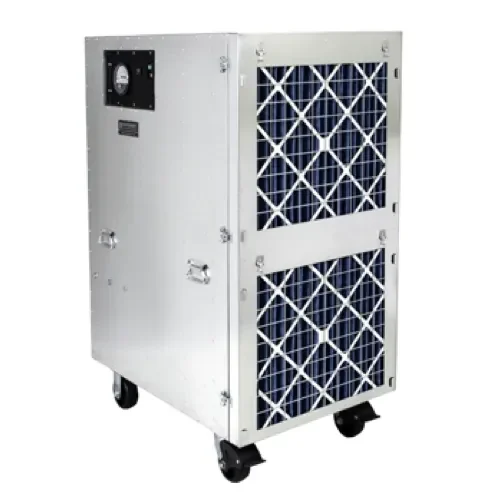
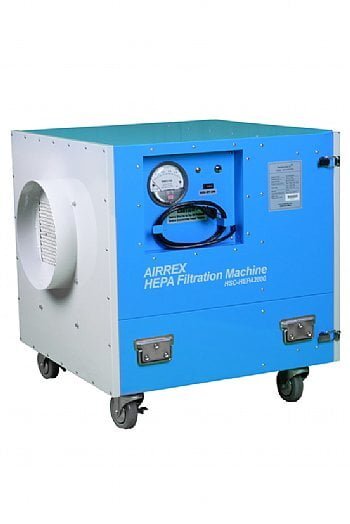
Common HEPA Equipment Options
We typically recommend equipment based on the scale of your project:
- Compact Units (~750 CFM): Best for containment areas and smaller spaces
- Mid-Size Units (~2,000 CFM): Ideal for restoration and healthcare environments
- High-Capacity Systems (2,000+ CFM): Designed for large commercial and industrial applications
👉 Not sure what you need? We’ll size it for you quickly.
Maintenance Matters
A poorly maintained HEPA system won’t just lose performance—it can disrupt your entire operation.
Best practices include:
- Replacing pre-filters regularly (often monthly)
- Monitoring airflow and pressure
- Changing HEPA filters based on usage (typically 1–6 years)
We also offer rental and service options if you’d rather not manage maintenance yourself.
Why Work With Climate Control Solutions
We focus on solving problems—not just selling equipment.
- Fast deployment (often same-day or next-day)
- Accurate sizing and recommendations
- Rental and purchase options available
- Experience across construction, healthcare, and restoration
- Reliable, commercial-grade equipment
Frequently Asked Questions About HEPA Filtration
1. What does a HEPA filter remove from the air?
A HEPA filter removes 99.97% of airborne particles at 0.3 microns, including dust, pollen, mold spores, bacteria, and fine smoke particles.
2. Do HEPA filters remove viruses?
Yes. While viruses are smaller than 0.3 microns, they are captured through diffusion and often attach to larger particles that HEPA filters can trap.
3. When do you need a HEPA air scrubber instead of a regular air purifier?
You need a HEPA air scrubber for applications like construction, mold remediation, and restoration projects where high airflow, containment, and fast air cleaning are required.
4. How do I know what size HEPA air scrubber I need?
Sizing depends on room size, contamination level, and required air changes per hour (ACH). Most professionals calculate the required CFM based on cubic footage and job conditions.
5. How fast can HEPA filtration clean the air in a room?
With properly sized equipment, HEPA systems can achieve multiple air changes per hour—often cleaning the air in a space within 30–60 minutes, depending on the environment and setup.
Get the Right HEPA Solution Fast
If you’re dealing with dust, mold, smoke, or air quality concerns, timing matters.
Contact Climate Control Solutions today to get the right HEPA filtration system for your application—so you can stay compliant, protect your team, and keep your project on track.