



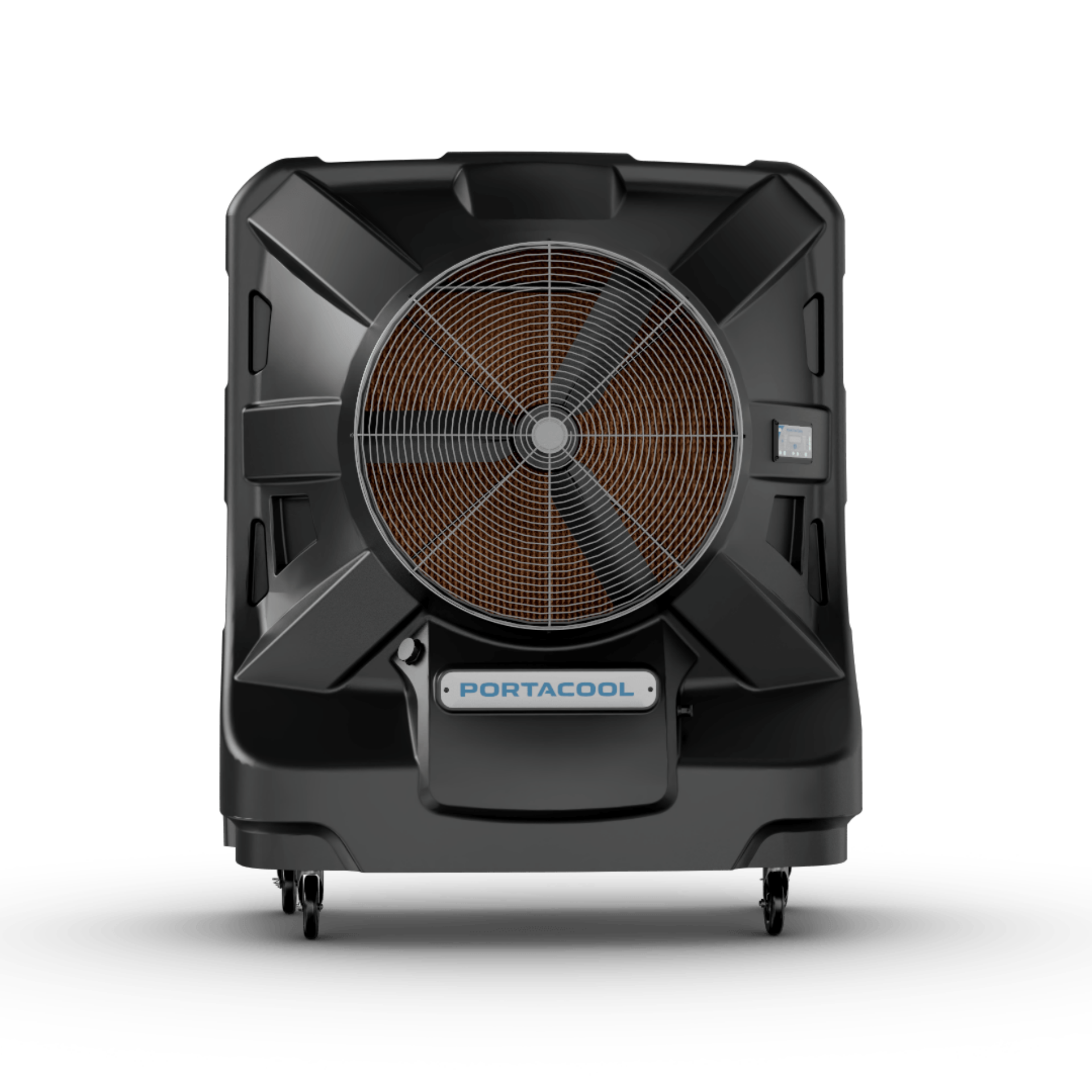
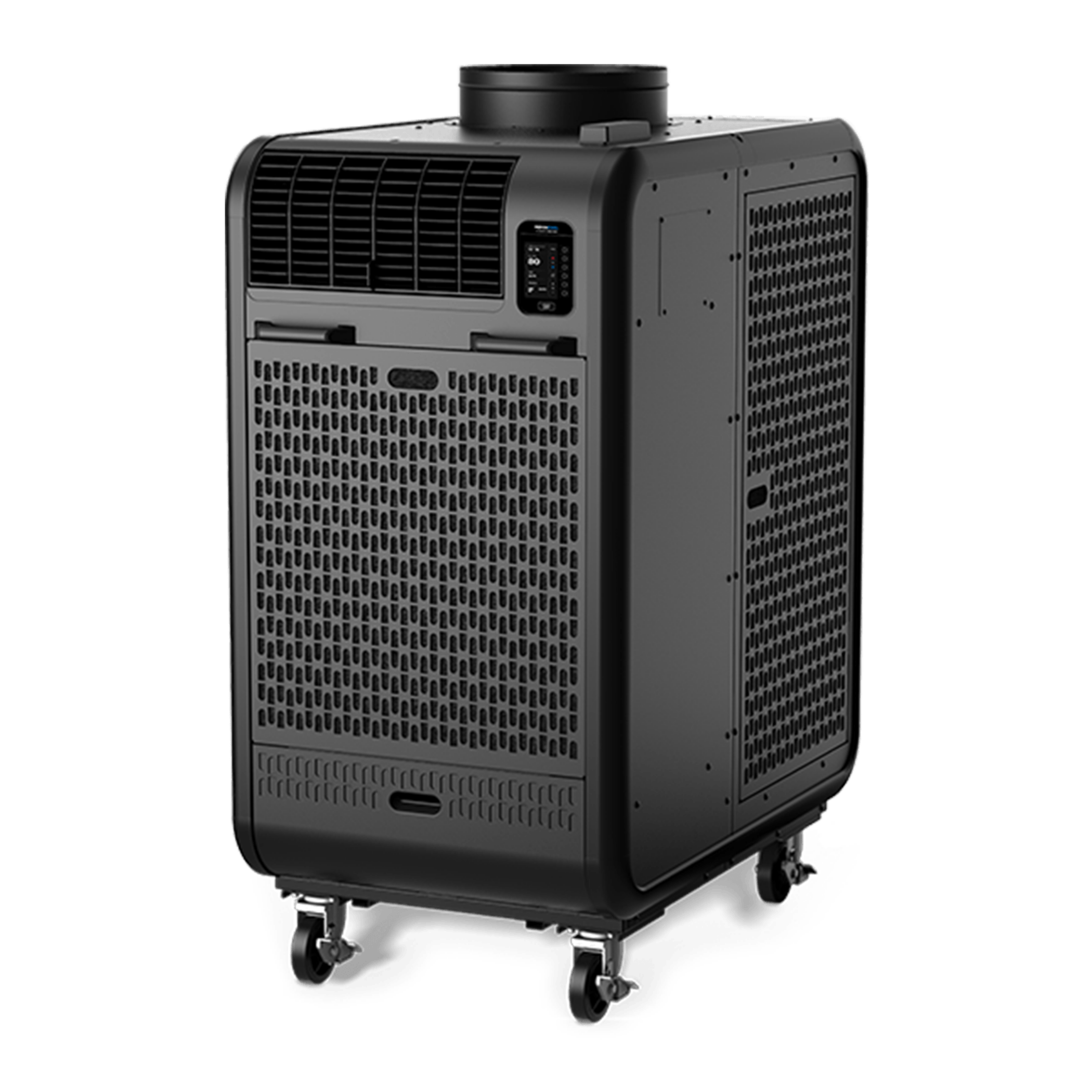
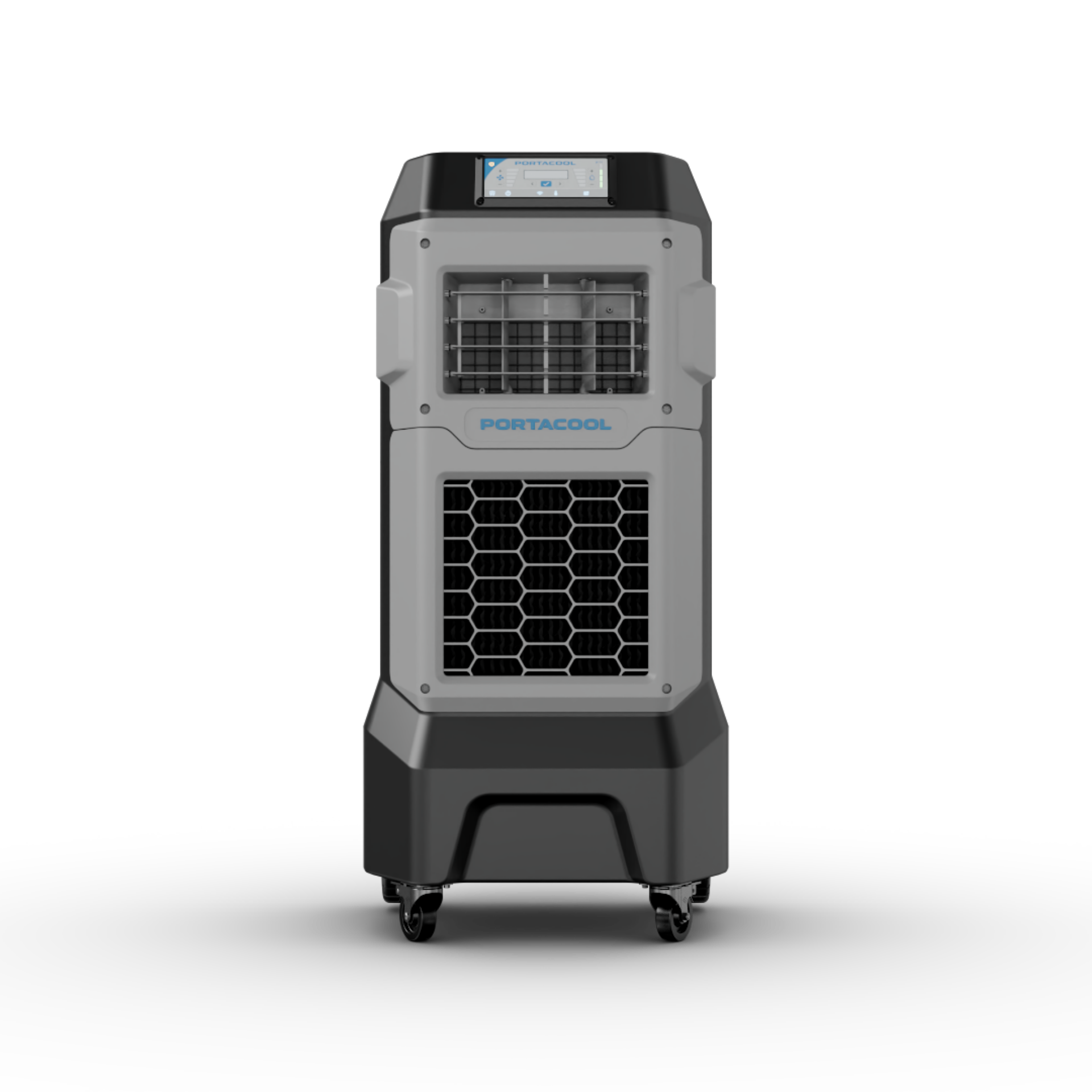
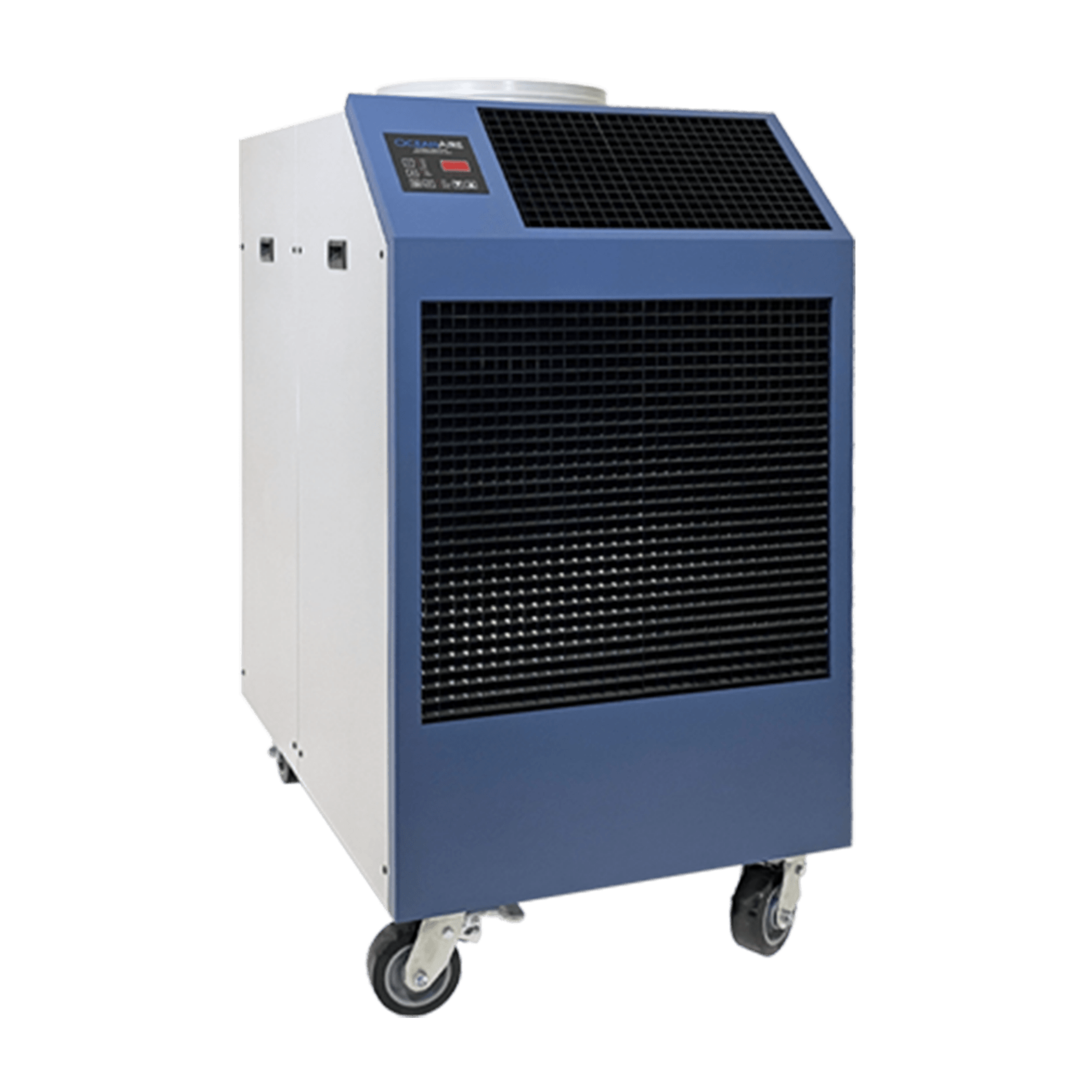
When selecting a portable cooling solution for commercial, industrial, or temporary environments, two common options are portable heat pumps and portable air conditioning units. Although both systems provide cooling, heat pumps also offer heating capabilities—making them useful year-round.
This guide compares portable heat pumps and portable AC units across cooling method, heating capability, electrical requirements, operating environments, and ideal applications to help determine which option fits your project best.
Overview of Each System
Portable Heat Pumps
Portable heat pumps use a reversible refrigerant cycle, allowing the system to provide both cooling and heating. In cooling mode, they operate like a standard portable air conditioner. In heating mode, they extract heat from the surrounding air and redistribute it indoors.
Portable heat pumps are often used in facilities that need year-round temperature control, seasonal flexibility, or supplemental heating and cooling in different zones of a building.
Portable AC Units
Portable AC units are designed solely for cooling. They remove heat from the air and exhaust it through ducting, providing conditioned air to the space. These units do not offer any heating functionality.
Portable AC units are typically used in offices, server rooms, retail spaces, and industrial environments that require reliable cooling without the need for heating.
Portable Heat Pumps vs Portable AC Units Comparison Table
| Category | Portable Heat Pumps | Portable AC Units |
|---|---|---|
| Heating Capability | Yes (built-in heating mode) | No |
| Cooling Capability | Yes | Yes |
| Operating Modes | Heating & Cooling | Cooling only |
| Tonnage Range | 1–12 tons | 1–12 tons |
| Electrical Options | 115V–460V | 115V–460V |
| Energy Efficiency | Higher (dual-function) | Standard |
| Seasonal Use | Year-round | Seasonal (cooling only) |
| Best For | Mixed climates, year-round use | Warm weather or cooling-only needs |
| Maintenance | Standard AC maintenance | Standard AC maintenance |
Where Portable Heat Pumps Have the Advantage
- Provide both cooling and heating
- Useful for year-round temperature management
- Reduce the need for separate heating equipment
- More versatile for temporary structures and rental applications
- Ideal for spring/fall temperature fluctuations
- Lower operating costs in moderate heating conditions compared to electric heaters
Portable heat pumps are typically chosen by facilities that need cooling in the summer and heating in the winter, or environments that regularly fluctuate between warm and cool conditions.
Where Portable AC Units Have the Advantage
- Lower upfront cost compared to heat pump models
- Simpler operation with fewer modes
- Great for climates where heating is not required
- Ideal for dedicated cooling environments
- Widely available in more small and mid-size models
Portable AC units are best for businesses that only require reliable cooling and have no need for supplemental heat.
Best Choice by Application
Year-Round Facilities
- Portable Heat Pumps — ideal for offices, schools, commercial buildings, and any space that needs both heating and cooling.
Server Rooms, Data Centers, IT Closets
- Portable AC Units — heating is not needed and could be harmful to equipment.
Industrial or Manufacturing Spaces
- Both options can work depending on whether heating is required in colder seasons.
Temporary Spaces (Tents, Trailers, Events)
- Portable Heat Pumps — provide flexibility for unpredictable weather.
How to Decide Between Portable Heat Pumps and Portable AC Units
Choose Portable Heat Pumps if:
- You need heating and cooling
- Your climate has seasonal temperature swings
- You want one system for year-round comfort
- The environment includes people, not equipment
- You want better energy efficiency for moderate heating needs
Choose Portable AC Units if:
- You only need cooling
- You’re cooling equipment or sensitive electronics
- Heating is unnecessary or undesirable
- Lower upfront cost is a priority
- You want a simple, cooling-only solution
Both options are effective—your choice depends on whether the space requires heating, cooling only, or year-round climate control.