



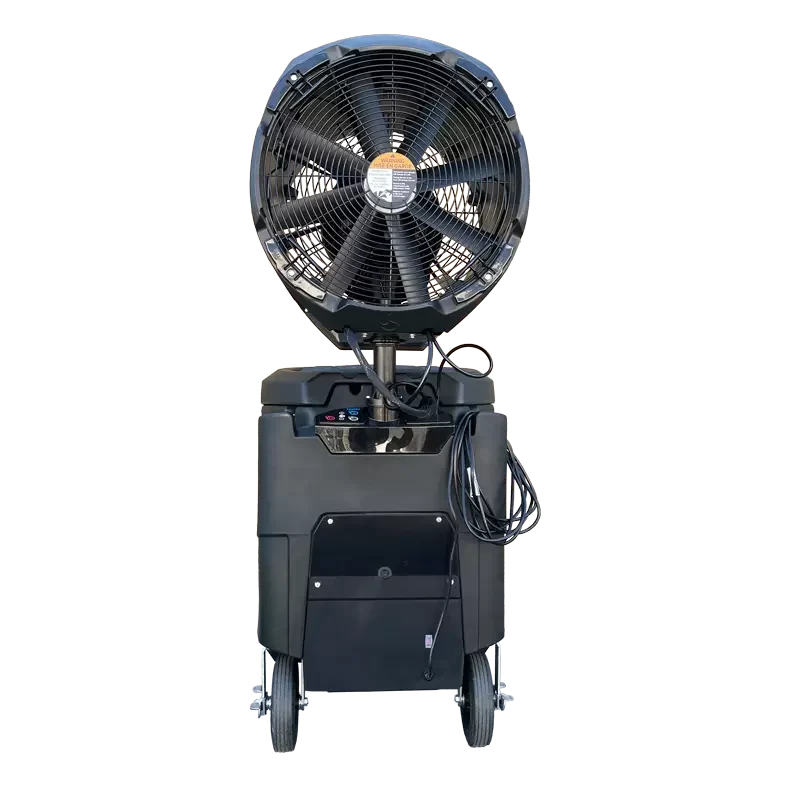
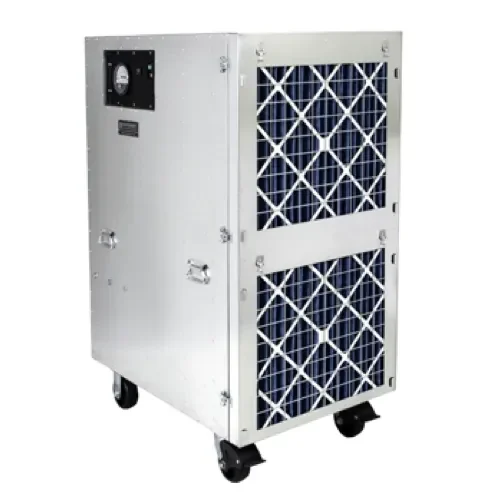
When selecting a portable air conditioning system for commercial or industrial environments, one of the most important decisions is choosing between air-cooled and water-cooled units. Both systems provide reliable cooling, but they operate differently and are suited for different building conditions and installation constraints.
This guide compares air-cooled and water-cooled portable AC units across cooling method, ventilation needs, water requirements, electrical considerations, and ideal applications to help determine which option fits your project best.
Overview of Each System
Air-Cooled Portable AC Units
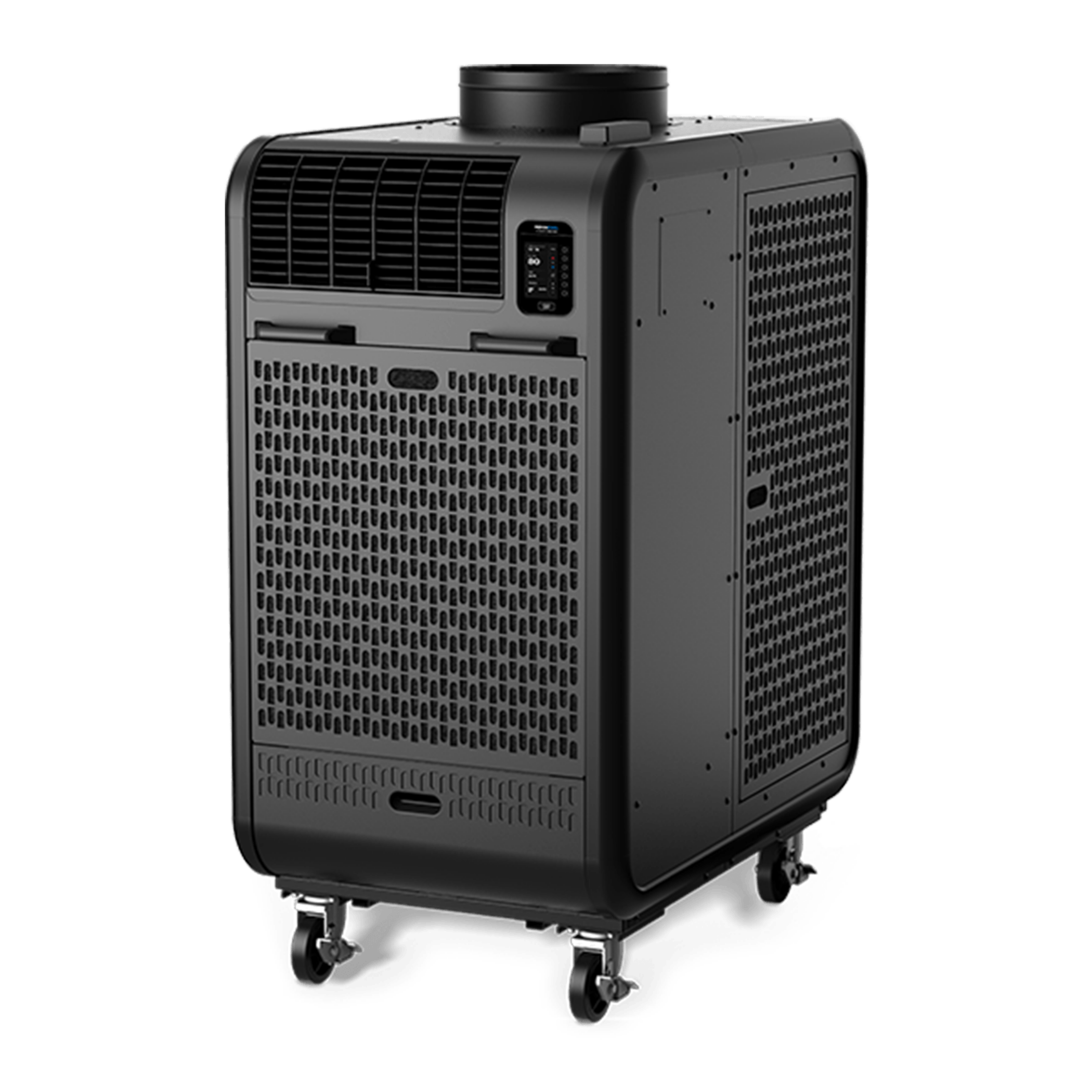
Air-cooled portable AC units remove heat from the space by transferring it to the surrounding air and exhausting the hot air through ducting. These units require ventilation, typically through a drop ceiling, window, or exterior penetration.
Air-cooled units are the most common type of portable AC and are widely used in warehouses, offices, retail spaces, industrial areas, and temporary installations.
Water-Cooled Portable AC Units
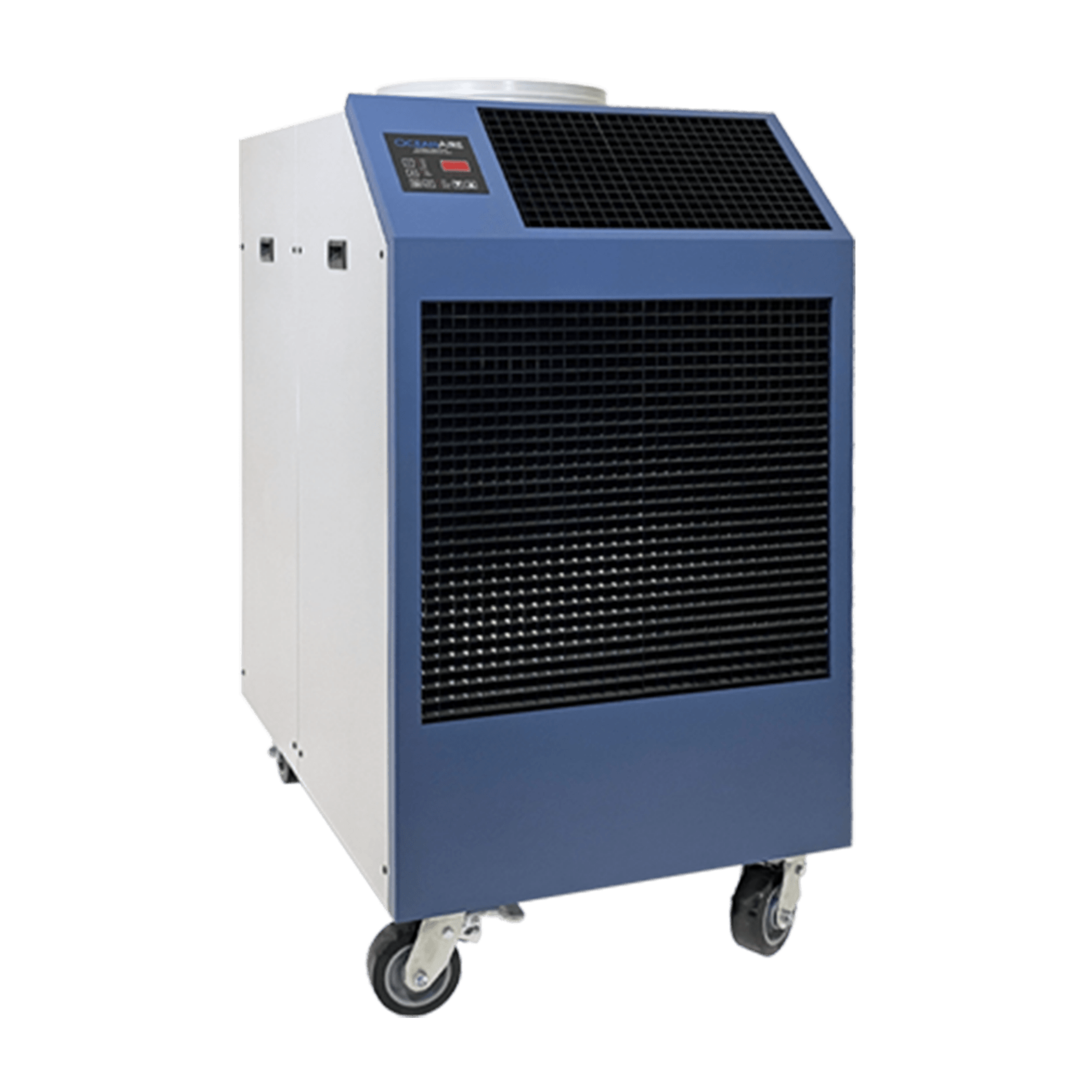
Water-cooled portable AC units use building water, a closed-loop system, or a condenser water source to remove heat instead of relying on air. Because they do not require hot-air exhaust, water-cooled units are ideal for buildings where venting is difficult or impossible.
Water-cooled units are commonly used in high-rise buildings, server rooms, interior spaces with no access to ventilation, and facilities with strict airflow restrictions.
Air-Cooled vs Water-Cooled Comparison Table
| Category | Air-Cooled Portable AC | Water-Cooled Portable AC |
|---|---|---|
| Venting Required | Yes (hot air exhaust) | No exhaust required |
| Water Supply Needed | No | Yes (building water or loop) |
| Installation Difficulty | Moderate | Moderate to high |
| Operating Cost | Standard | Depends on water source |
| Moisture Output | Condensate | Condensate |
| Ideal Environment | Ventilated spaces | Non-vented or sealed spaces |
| Tonnage Range | 1–12 tons | 1.5–5 tons (typical) |
| Noise Levels | Moderate | Lower (no hot-air fan needed) |
| Best For | Warehouses, offices | Data centers, high-rises |
Where Air-Cooled Units Have the Advantage
- No connection to building water required
- Simple and quick installation
- Larger tonnage options available
- More units stocked and available
- Ideal for open or semi-open environments
- Lower upfront cost compared to water-cooled equipment
Air-cooled units are typically chosen for general cooling, temporary installations, and spaces with access to venting such as drop ceilings or exterior walls.
Where Water-Cooled Units Have the Advantage
- No venting required, making them ideal for sealed spaces
- Lower noise output due to no hot-air exhaust fan
- More effective in high-ambient or poorly ventilated environments
- Great for large interior buildings or high-rise locations
- Independent of outdoor temperatures
Water-cooled units are commonly selected when venting is restricted, such as in server rooms, conference centers, basements, interior labs, and structural spaces without ceiling access.
Best Choice by Application
Server Rooms & Data Centers
- Water-Cooled — solves venting limitations and maintains stable cooling.
Warehouses, Retail, Industrial Spaces
- Air-Cooled — easier to install and more cost-effective.
High-Rise Buildings
- Water-Cooled — no access to windows or external exhaust.
Temporary or Emergency Cooling
- Air-Cooled — fast setup and broader availability.
How to Decide Between Air-Cooled and Water-Cooled
Choose Air-Cooled if:
- You have access to ceiling or window venting
- You want simple installation
- You need higher tonnage options
- The environment is well-ventilated
- You need quick, temporary cooling
Choose Water-Cooled if:
- Your space cannot be vented
- You are cooling a sealed room or interior zone
- Building water is easily accessible
- You want lower noise levels
- You are cooling a data center or telecom room
Both systems are effective, but the right choice depends on ventilation availability, building design, and whether the space can support a water supply connection.