



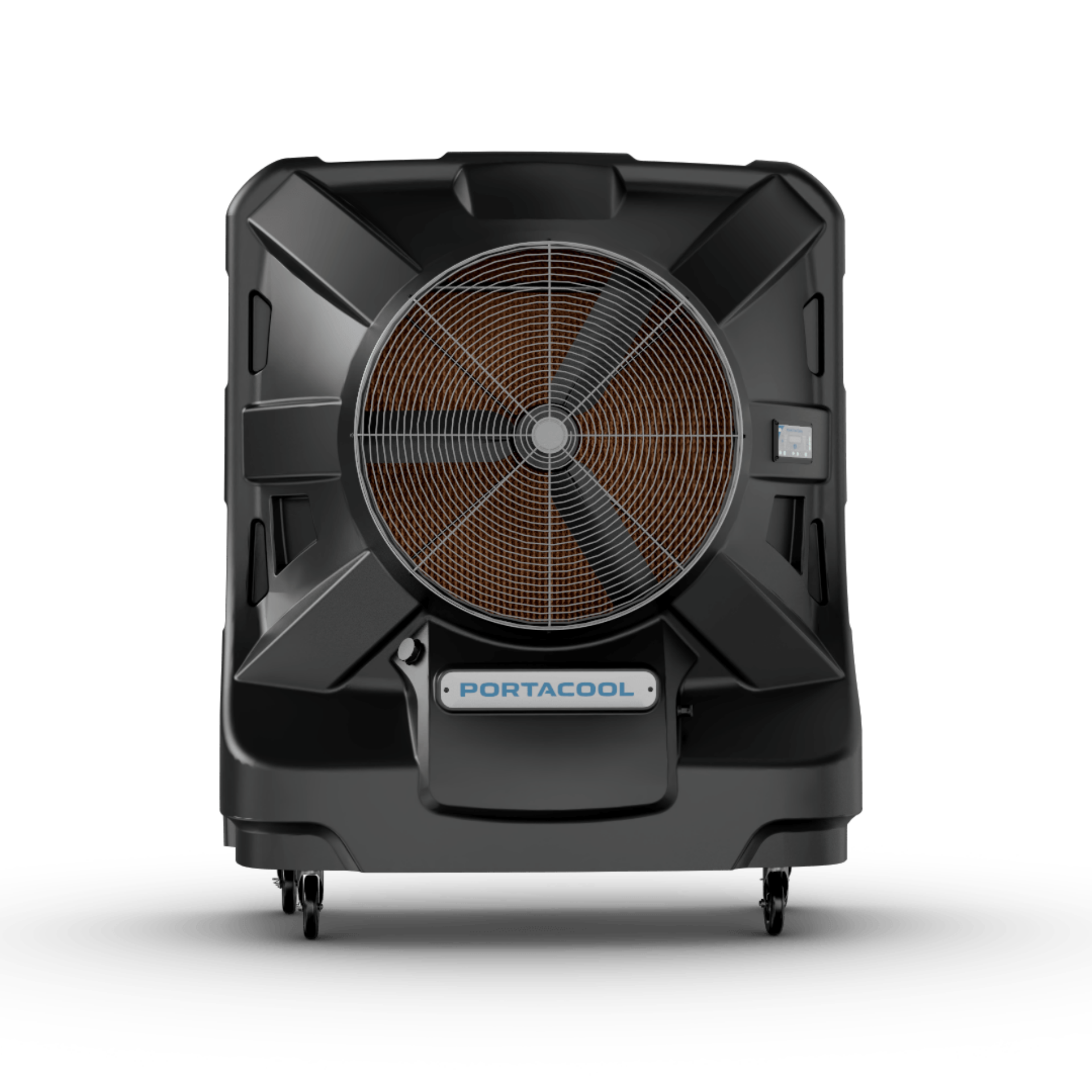
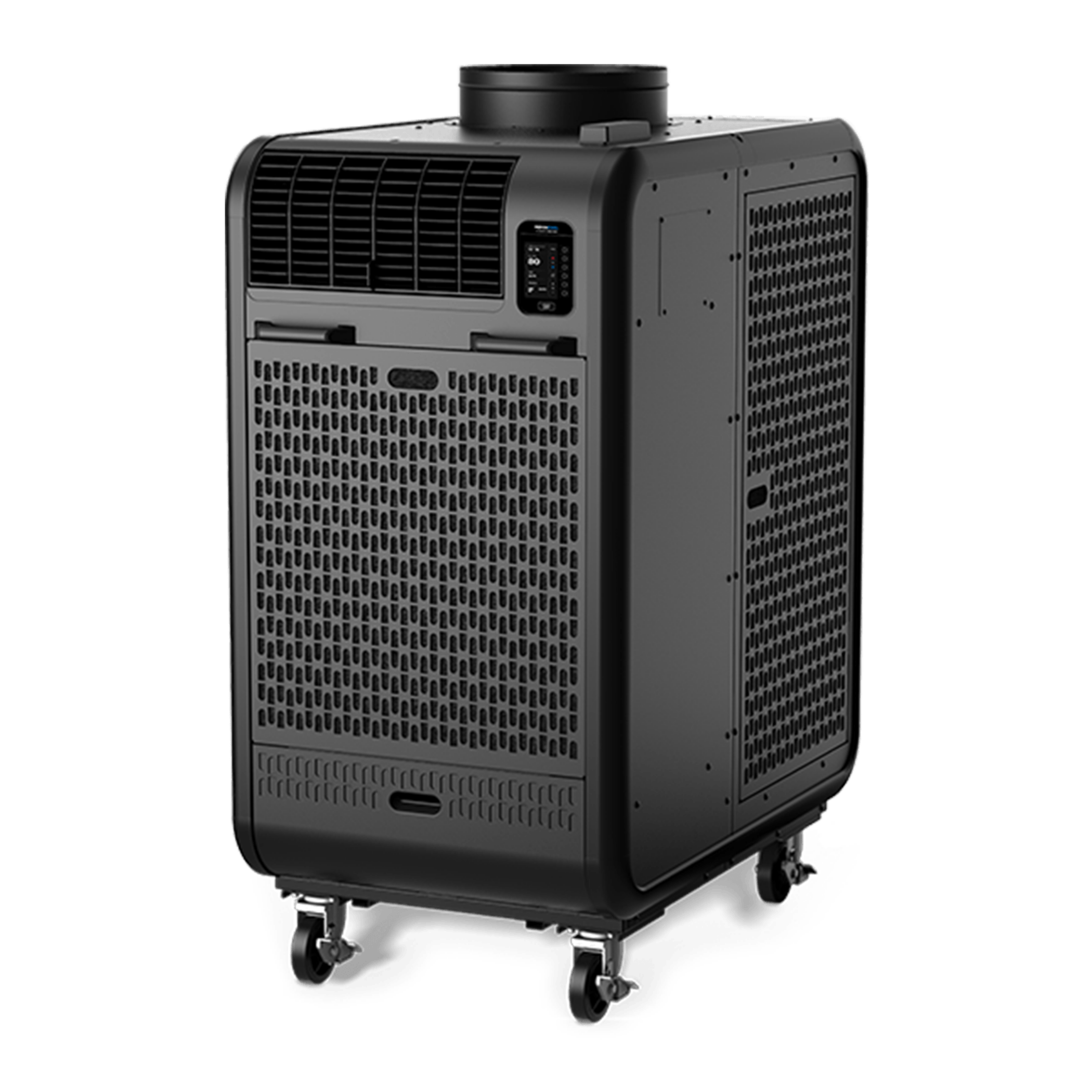
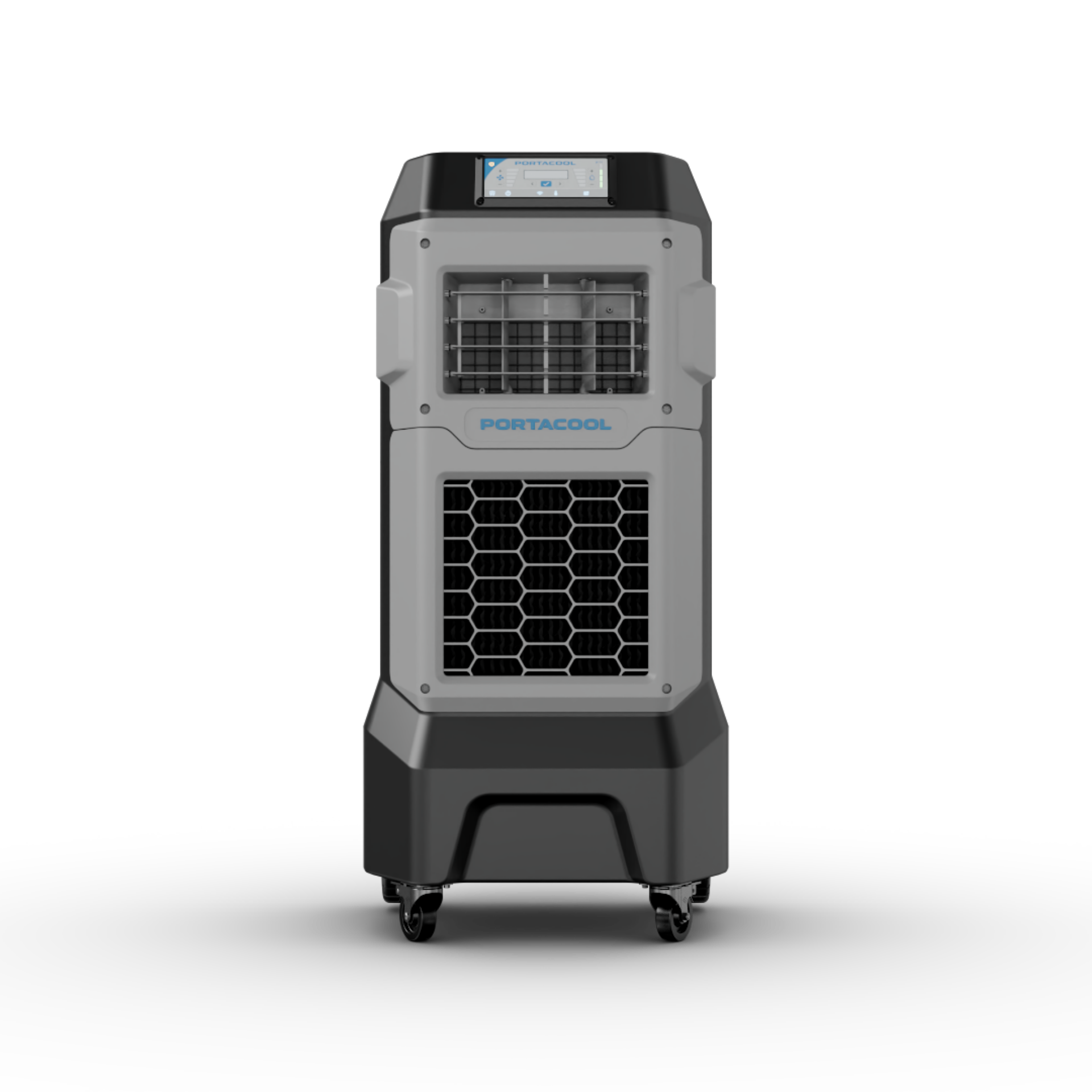
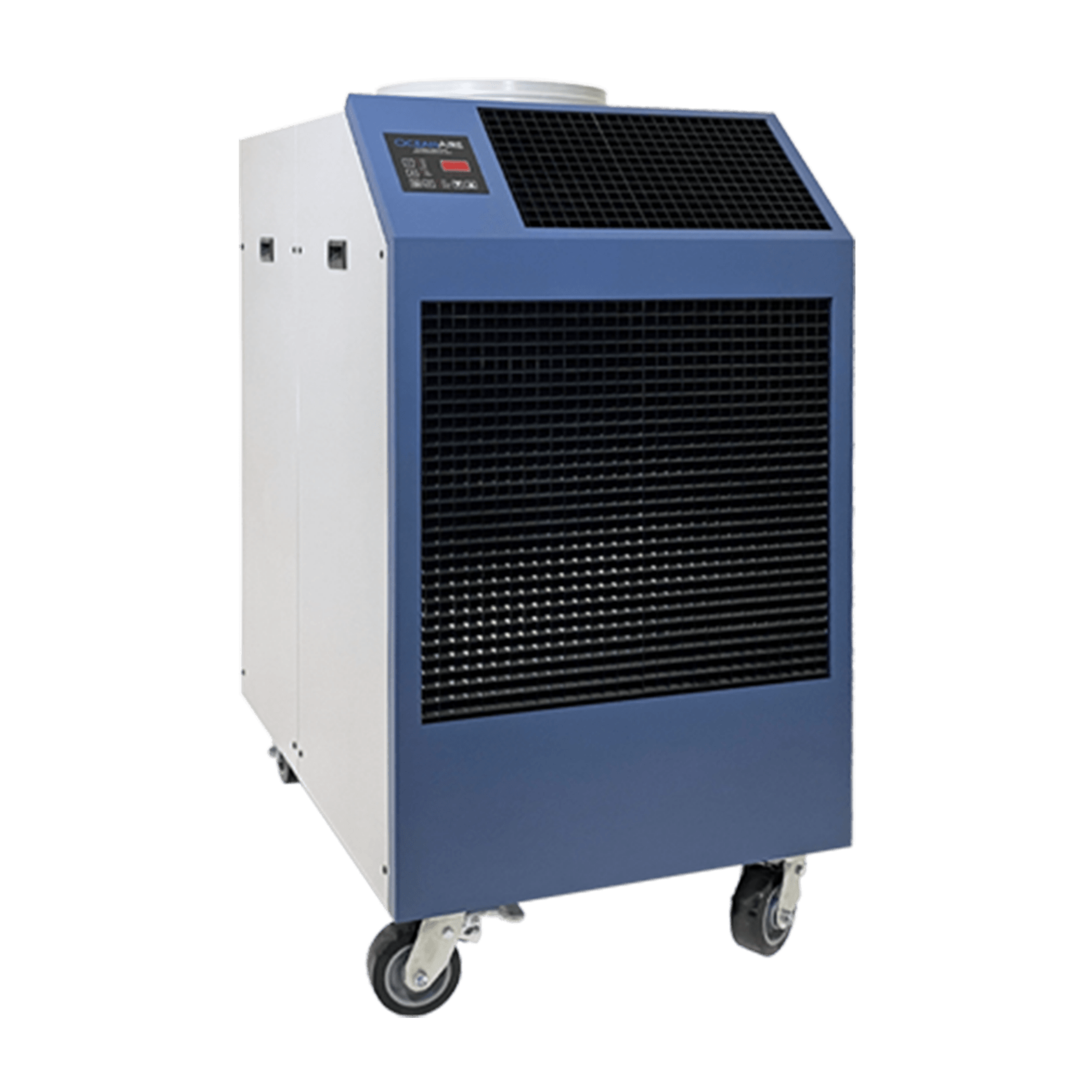
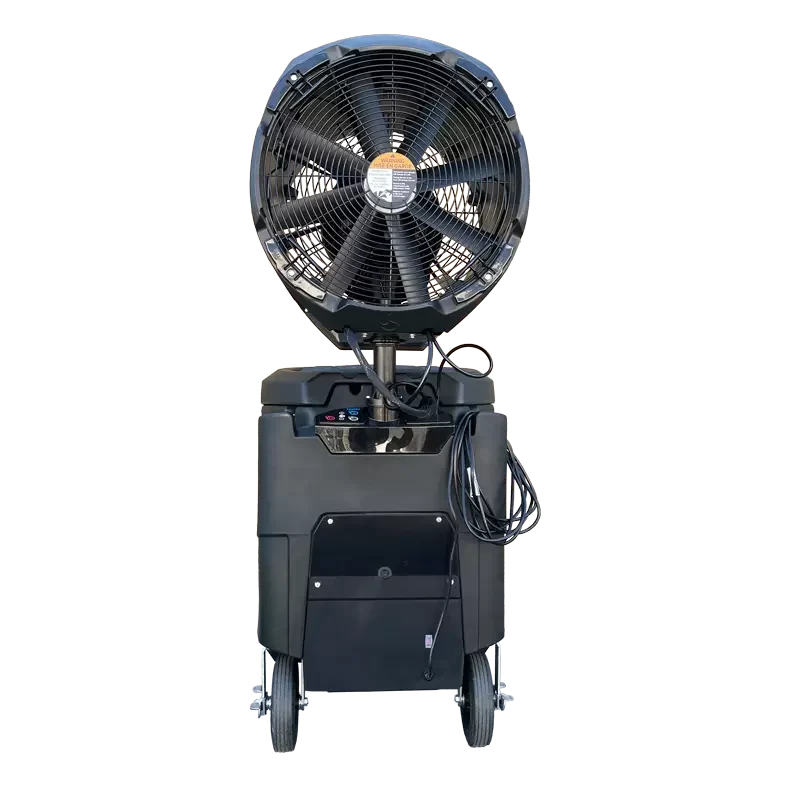
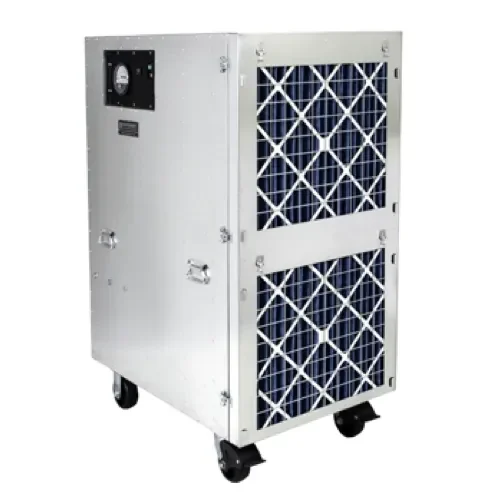
When evaluating cooling options for commercial or industrial spaces, two categories often compared are spot coolers and portable AC units. While the terms are sometimes used interchangeably, they are not the same. Each serves a different purpose and is designed for different types of spaces and cooling requirements.
This guide compares spot coolers and portable AC units across cooling performance, airflow, installation needs, electrical requirements, and ideal applications to help determine which option fits your project best.
Overview of Each System
Spot Coolers
Spot coolers are commercial-grade portable air conditioners designed to direct cooling to a specific area or piece of equipment. They use directional cold-air nozzles to target heat-sensitive zones while exhausting hot air through ducting.
Spot coolers are commonly used in data centers, server rooms, industrial facilities, manufacturing lines, and any space where localized cooling is required without conditioning the entire room.
Portable AC Units
Portable AC units (sometimes called portable room air conditioners) are designed to cool entire rooms, not just specific zones. They typically feature a single or dual exhaust hose and distribute conditioned air broadly through a large discharge grille.
Portable ACs are more common in offices, retail, small commercial spaces, and temporary work areas where full-room comfort cooling is needed.
Spot Coolers vs Portable AC Units Comparison Table
| Category | Spot Coolers | Portable AC Units |
|---|---|---|
| Cooling Purpose | Targeted, directional cooling | Full-room cooling |
| Airflow Style | Nozzles or focused discharge | Wide, dispersed airflow |
| Installation | Requires hot-air ducting | Simple exhaust hose |
| Moisture Output | Condensate or pump | Condensate or bucket |
| Indoor Use | Excellent | Excellent |
| Outdoor Use | Limited | Limited |
| Climate Control | Precise and focused | Broad and general |
| Tonnage Range | 1–12 tons | 8,000–30,000 BTU typical |
| Electrical Options | 115V–460V | Primarily 115V–230V |
| Best For | Equipment, hot zones, industrial areas | Offices, retail, small rooms |
Where Spot Coolers Have the Advantage
- Delivers focused, high-capacity cooling directly to heat-generating equipment
- Ideal for data centers, telecom closets, and industrial machinery
- Available in much larger capacities (1–12 tons)
- Performs well in high-ambient or high-load environments
- Stronger airflow and more durable commercial construction
Spot coolers are typically selected when cooling equipment, specific zones, or hot spots, rather than conditioning an entire room.
Where Portable AC Units Have the Advantage
- Cools an entire room, not just a specific area
- Easy installation with basic exhaust hose
- Lower cost for smaller spaces
- Great for offices, retail spaces, and temporary rooms
- Plug-and-play operation for light commercial use
Portable AC units are generally chosen when the goal is to provide comfort cooling for people in a small or medium-sized enclosed room.
Best Choice by Application
Data Centers, Server Rooms, IT Closets
- Spot Coolers — protects equipment and manages high heat loads.
Offices, Retail, Temporary Workspaces
- Portable AC Units — designed for whole-room comfort.
Industrial or Manufacturing Areas
- Spot Coolers — better for targeting machinery, production lines, or overheated zones.
Small Rooms or Residential-Type Spaces
- Portable AC Units — simple installation and broad cooling.
How to Decide Between Spot Coolers and Portable AC Units
Choose Spot Coolers if:
- You need to cool specific equipment, hot zones, or high-heat commercial areas
- Capacity needs exceed typical portable AC units
- You need 1–12 ton options
- You are cooling machinery, racks, servers, or industrial processes
Choose Portable AC Units if:
- You need comfort cooling in an enclosed room
- The space is small or moderate in size
- You want simple installation with minimal ducting
- You only require light or moderate cooling capacity
Both systems serve different purposes, and the right choice depends on whether you’re cooling people, equipment, or specific high-heat zones.