



When choosing a portable cooling solution for commercial, industrial, or warehouse environments, the two most commonly compared options are spot coolers and evaporative coolers. While both provide relief in warm environments, they work very differently and are suited for completely different types of spaces.
This guide compares spot coolers and evaporative coolers across cooling method, operating environment, power requirements, moisture output, effectiveness, and ideal applications to help determine which system fits your project best.
Overview of Each System
Spot Coolers
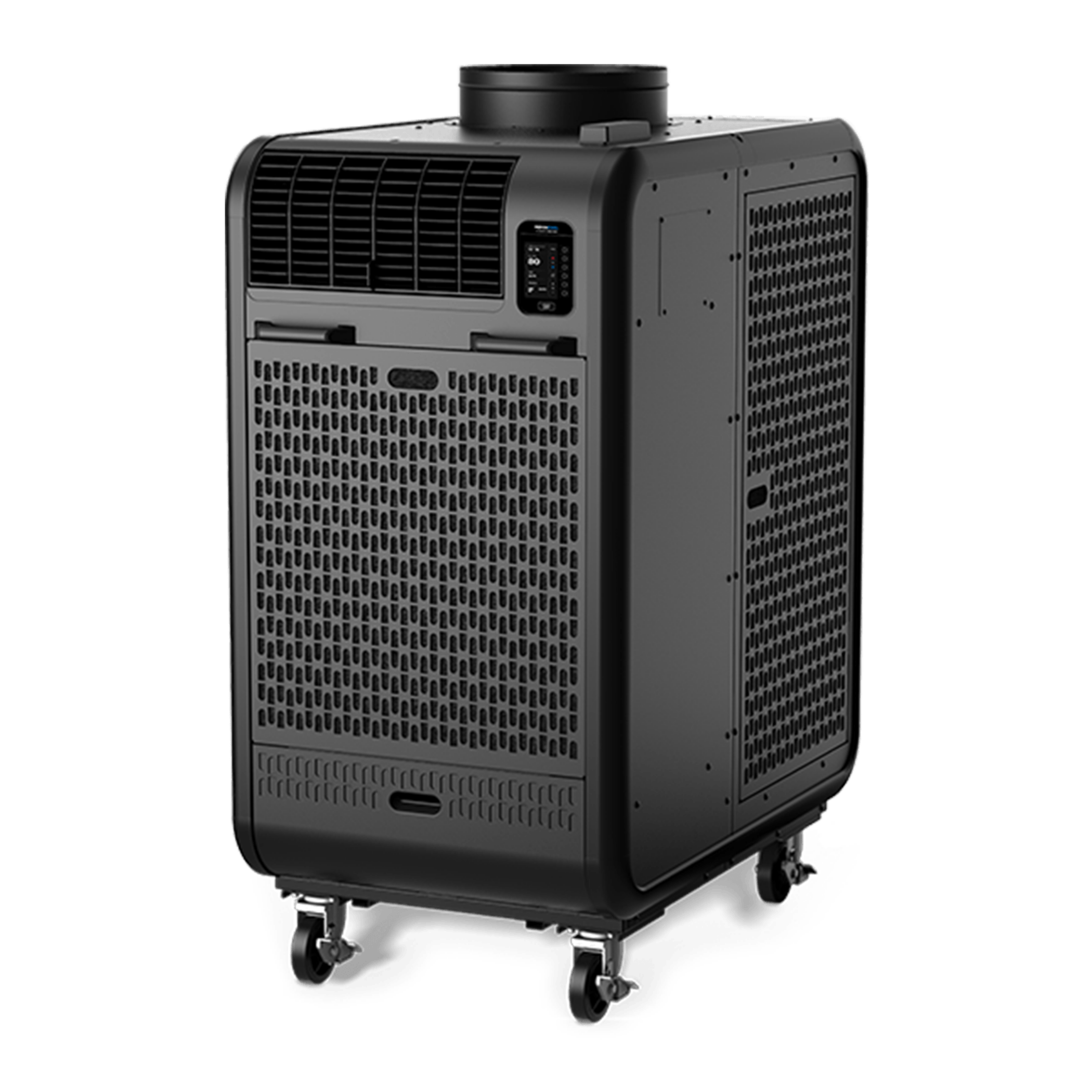
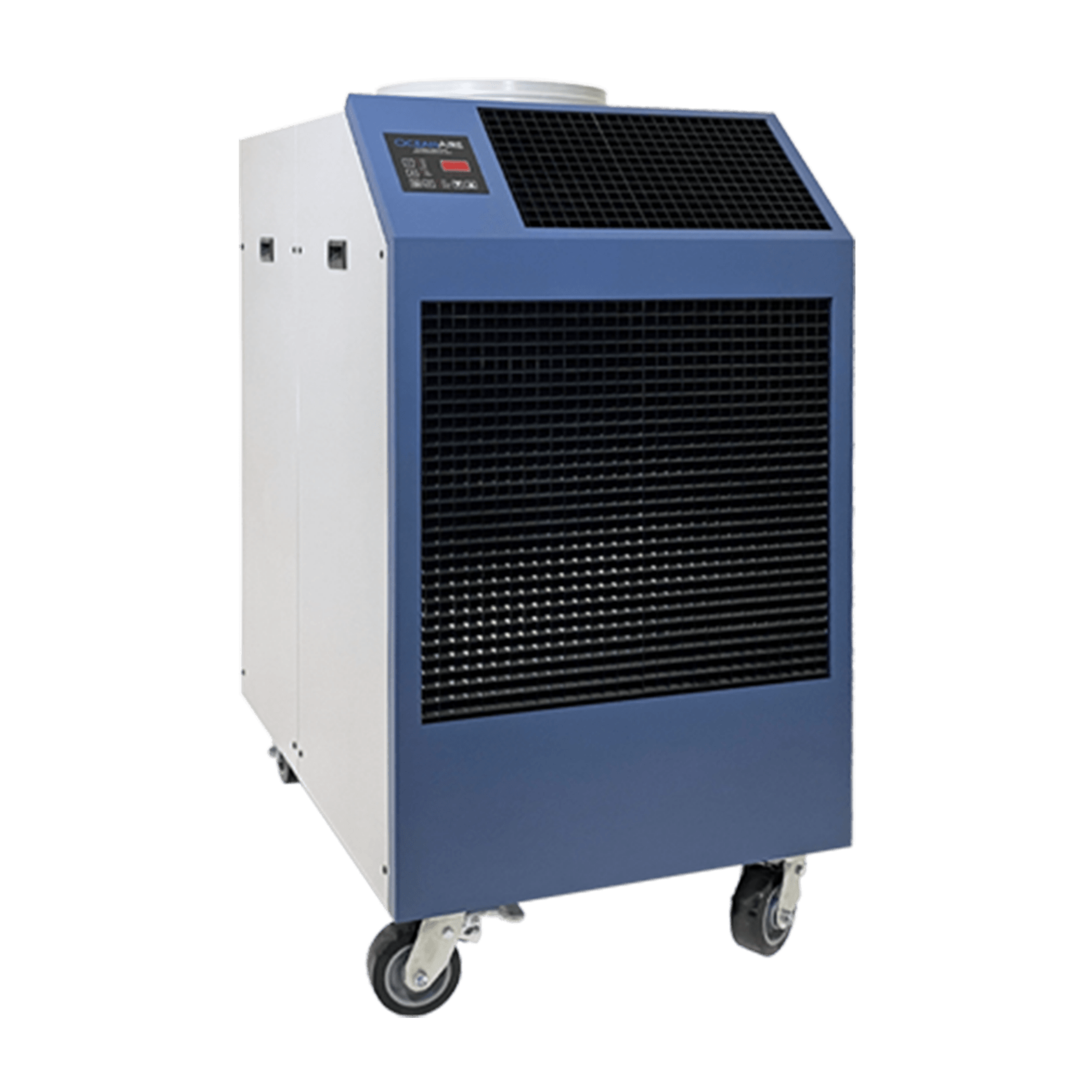
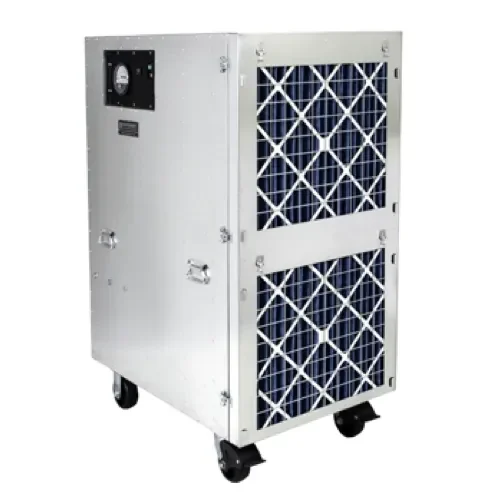
Spot coolers are portable air conditioners that remove heat from the air using refrigerant coils. They deliver cold, conditioned air through adjustable nozzles and exhaust warm air through ducting. Spot coolers do not add moisture to the space and can be used in enclosed, sealed, or climate-sensitive environments.
Spot coolers are typically used in offices, data centers, healthcare spaces, industrial facilities, and temporary structures where precise temperature control is needed.
Evaporative Coolers
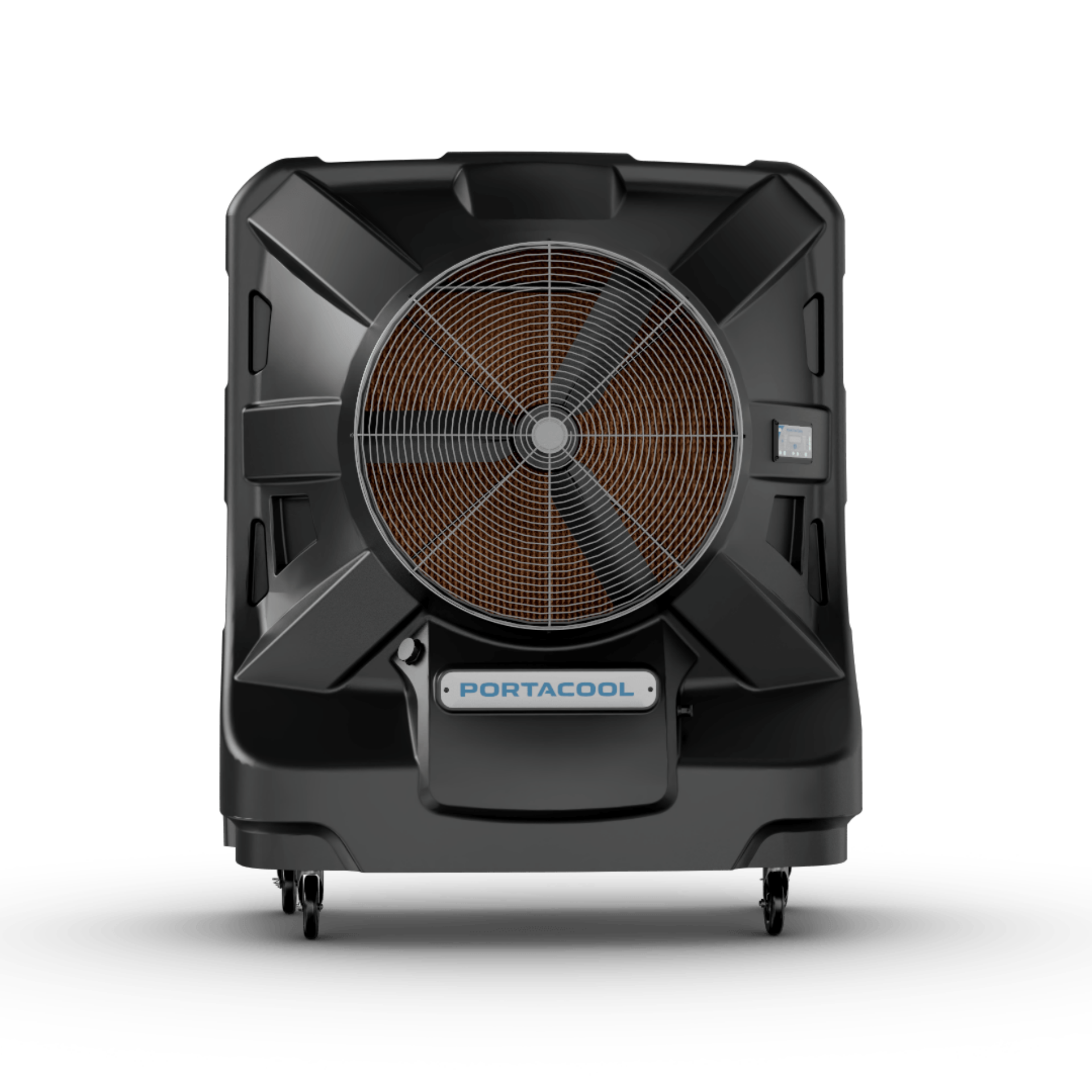
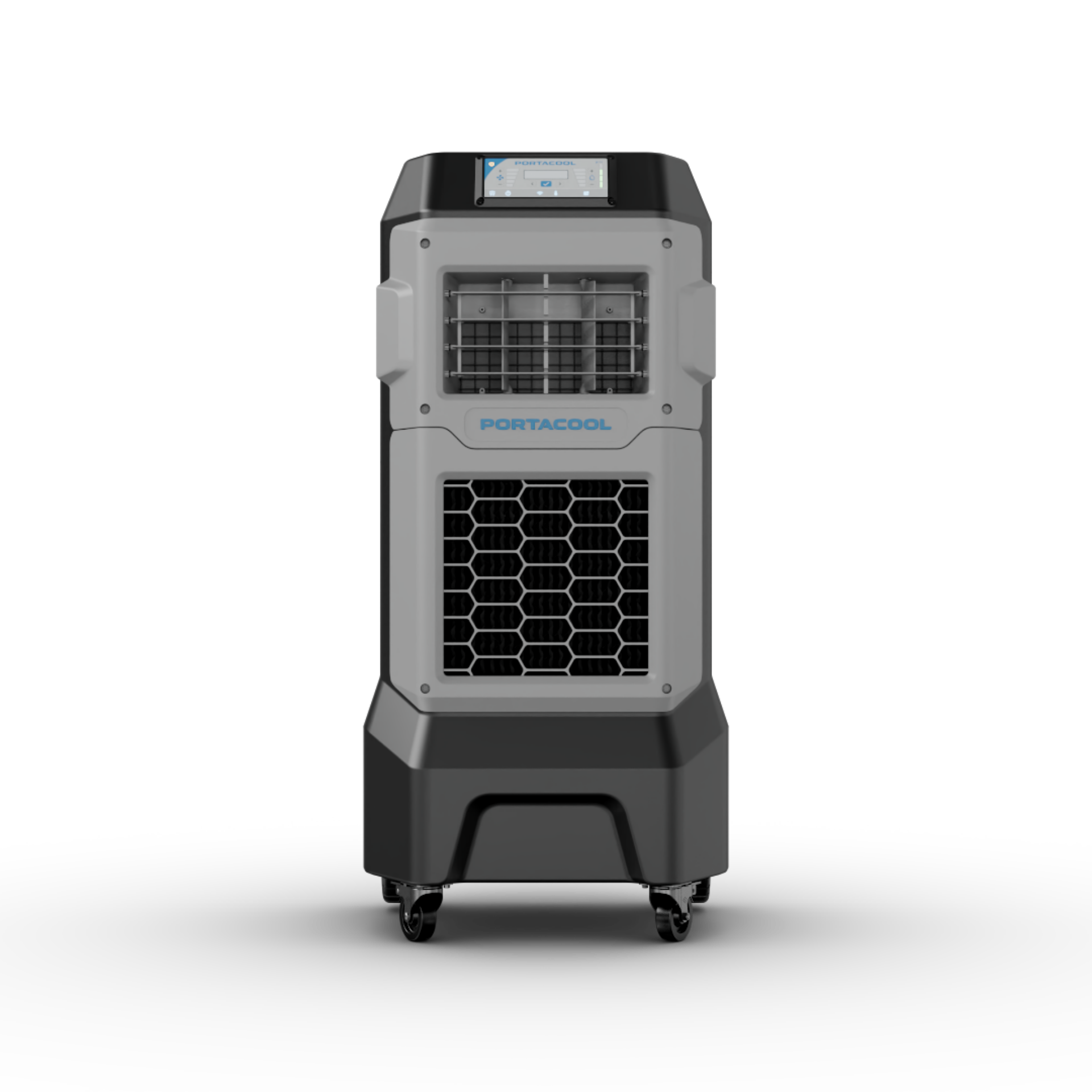
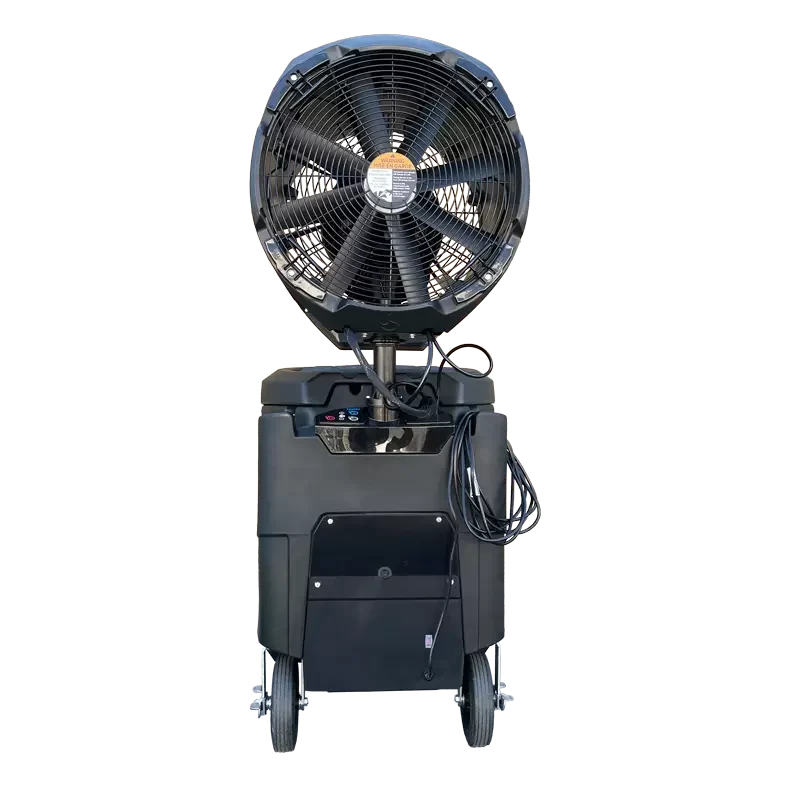
Evaporative coolers (swamp coolers) cool the air by pulling warm air across water-saturated media pads. As the water evaporates, the air temperature drops and is discharged as a high-volume breeze. Because the cooling relies on evaporation, evaporative coolers add humidity to the air and are only effective in dry, well-ventilated spaces.
Evaporative coolers are commonly used in warehouses, workshops, loading docks, gyms, agricultural environments, and outdoor or semi-outdoor areas.
Spot Coolers vs Evaporative Coolers Comparison Table
| Category | Spot Coolers | Evaporative Coolers |
|---|---|---|
| Cooling Method | Refrigerant-based air conditioning | Evaporative cooling |
| Adds Humidity | No | Yes |
| Best Climate | Any climate | Dry, low-humidity climates |
| Ventilation Required | Yes (hot air exhaust) | Yes (fresh air supply) |
| Temperature Drop | Precise, controlled cooling | Depends on humidity levels |
| Moisture Output | None | High |
| Indoor Use | Excellent | Limited |
| Outdoor Use | Limited | Excellent |
| Power Requirements | 115V–460V | 120V–240V |
| Maintenance | Condensate draining, filter cleaning | Water supply, pad cleaning |
| Ideal For | Offices, data centers, industrial spaces | Warehouses, gyms, outdoor areas |
Where Spot Coolers Have the Advantage
- Precise, conditioned cooling
- Works in humid or enclosed spaces
- Does not increase moisture levels
- Suitable for data centers, offices, and temperature-sensitive environments
- Available in 1-ton to 12-ton sizes
- Year-round performance with optional heat pump models
Spot coolers are preferred for indoor cooling, equipment protection, and environments where humidity must be controlled.
Where Evaporative Coolers Have the Advantage
- Very high airflow output
- Fast cooling in dry climates
- Low operating costs
- No refrigerant or compressor
- Ideal for open warehouses and semi-outdoor areas
- Larger coverage areas at lower cost
Evaporative coolers are preferred when you need air movement, ventilation, and large-area cooling in dry environments.
Best Choice by Application
Offices, Retail, Healthcare
- Spot Coolers — maintain stable temperatures and do not add moisture.
Warehouses, Gyms, Workshops
- Evaporative Coolers — excellent airflow and broad coverage.
Server Rooms & Data Centers
- Spot Coolers — humidity control is critical.
Outdoor or Semi-Outdoor Cooling
- Evaporative Coolers — best airflow and cooling effect.
Humid Climates
- Spot Coolers — evaporation becomes ineffective in high humidity.
How to Decide Between Spot Coolers and Evaporative Coolers
Choose Spot Coolers if:
- You need precise, controlled cooling
- The environment is enclosed or humidity-sensitive
- You’re cooling equipment or electronics
- You require year-round cooling or heating (heat pump models)
Choose Evaporative Coolers if:
- You’re cooling a large, open, or semi-outdoor space
- The climate is dry
- You need strong airflow at a lower operating cost
- You want simple installation and portable air movement
Both systems serve different needs, and the right choice depends on climate, ventilation, space type, and whether humidity control is required.